
109年:(醫檢)生化(1)
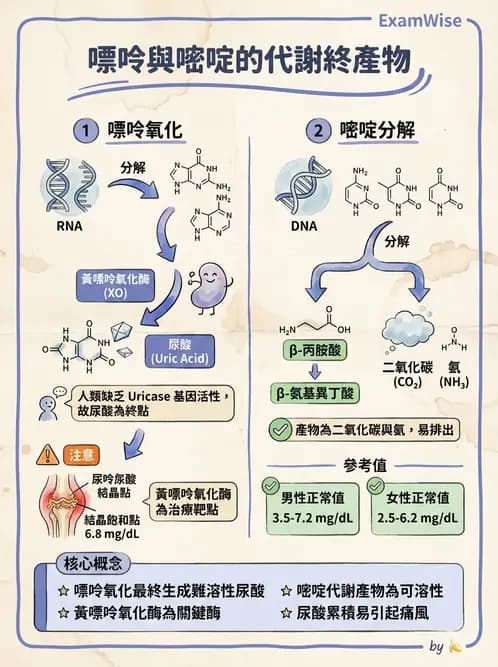
下列何種反應會產生尿酸( Uric acid )?
A嘧啶氧 化( Pyrimidine oxidation )
B嘌呤 氧化( Purine oxidation )
C嘧啶 脫水( Pyrimidine dehydration )
D嘌呤脫 水( Purine dehydration )
詳細解析
本題觀念:
本題考查尿酸(uric acid)的生成途徑,需了解嘌呤(purine)與嘧啶(pyrimidine)代謝的差異,以及黃嘌呤氧化酶(xanthine oxidase)在嘌呤分解中的關鍵角色。
選項分析
核苷酸的嘌呤鹼基(adenine、guanine)和嘧啶鹼基(cytosine、thymine、uracil)走完全不同的代謝降解路徑:
(A) 嘧啶氧化(Pyrimidine oxidation) 此選項錯誤。嘧啶(cytosine、thymine、uracil)的最終代謝產物是 β-丙胺酸(β-alanine)、β-胺基異丁酸(β-aminoisobutyric acid)、 和 ,可進入 TCA 循環。嘧啶代謝不會產生尿酸。
(B) 嘌呤氧化(Purine oxidation) 此選項正確。嘌呤(adenine、guanine)的分解代謝終產物(在人類)為尿酸: 黃嘌呤氧化酶(xanthine oxidase,
...(解析預覽)...
升級 VIP 解鎖圖文解析