
107年:視光學(2)
下列何種雙眼平衡的檢查方法沒有融像刺激( fusible stimuli )?
A偏光立體影像法( polaroid/vectofraph )
B隔板法 /TIB法( septum/Turville's infinity balance )
C垂直稜鏡分離法( vertical prism dissociated test )
D漢佛萊斯法( Humphriss method )
詳細解析
本題觀念:
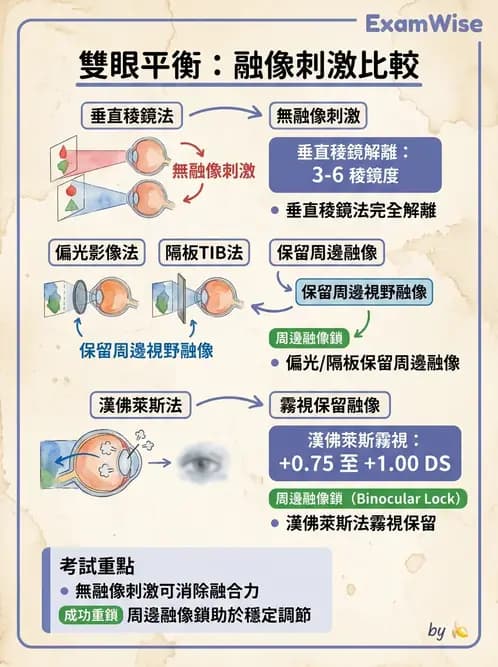
各種雙眼平衡(binocular balance)方法的特性比較,重點在於哪種方法不提供融像刺激(fusible stimuli),即完全解離(fully dissociated)兩眼,使其無法進行雙眼融合。
選項分析
(A) 偏光立體影像法(polaroid/vectograph) ❌ 偏光法使用偏振光鏡片,使左右眼分別看到不同的目標,但周邊(paracentral/peripheral)視野仍可看到共同影像,提供部分融像刺激(peripheral fusion)。中央視野雖解離,周邊視野的融像刺激仍然存在。
(B) 隔板法/TIB法(septum/Turville's infinity balance, TIB) ❌ 隔板法在受檢者鼻樑前放置一個隔板,使右眼只能看到右側的視標,左眼只能看到左側的視標。中央視野分離,但周邊視野未被阻隔,仍提供周邊融像刺激(peripheral fusible stimuli)。TIB 法和偏光法同屬「提供最自然雙眼視覺條件」的方法,因為周邊融像鎖定(peripheral binocular lock)仍存在。
(C) 垂直稜鏡分離法(vertical prism dissociated test) ✅ 稜鏡分離法使用垂直稜鏡(如一眼 base up,另一眼 bas
...(解析預覽)...
升級 VIP 解鎖圖文解析